Australian Children’s Board Books: A Buyer’s Guide
Hand a six-month-old a paperback and you’ll get it back in pieces. Hand them a board book and it comes back covered in dribble, slightly dented, and completely intact. That’s the entire reason board books exist: they’re the only format built to survive the way a baby actually treats a book.
Which makes buying them simpler than most baby purchases, but not quite as simple as the shops make it look. Search for Australian children’s board books and you get endless product grids, all titles and prices, none of them telling you what to actually look for or which ones are worth your money. This guide does that. This is a Grug fan site, and the Grug range has its own Australian children’s board books, so that bias is on the table — but the advice here applies to any board book you’re choosing.
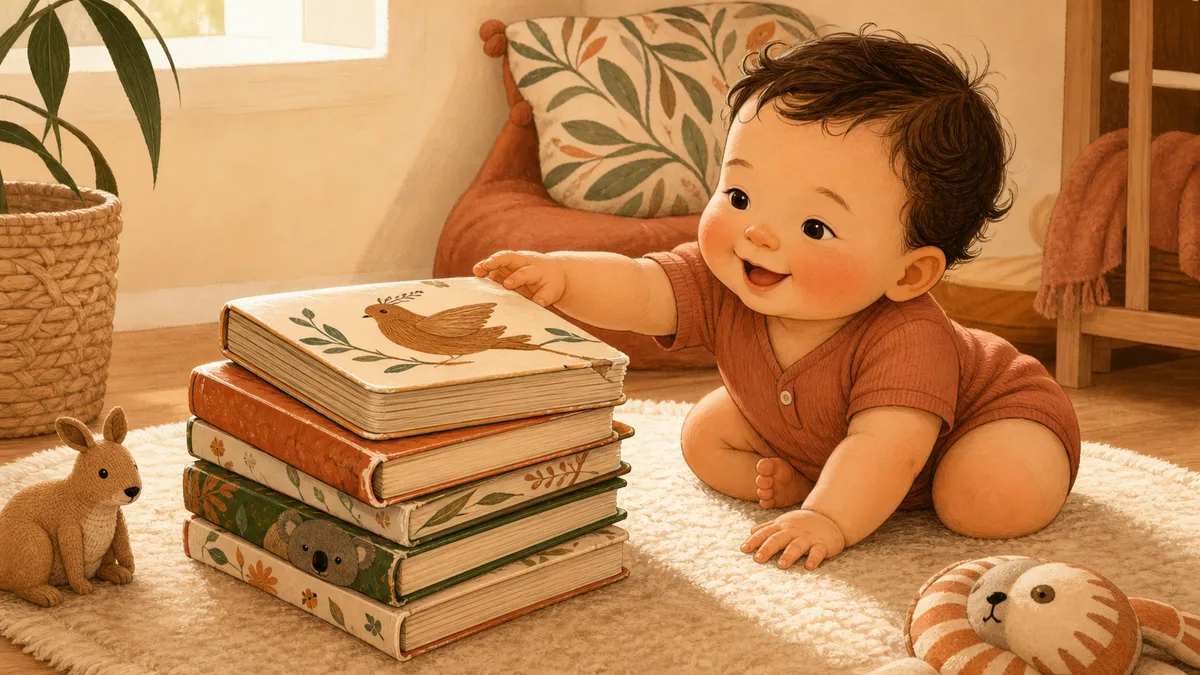 Board books are the only format built to survive how a baby actually treats a book.
What makes a good board book?
A good board book has thick, stiff cardboard pages that won’t tear, rounded corners that won’t jab a baby’s eye, and non-toxic inks because it’s going straight in the mouth. It’s small enough for little hands to hold and short enough to finish before a baby loses interest. Durability first, story second.
Everything else is a bonus. Lift-the-flaps are fun but rip if they’re flimsy. Glossy pages wipe clean (this matters more than you’d think). And a square, chunky shape survives being thrown off the highchair better than a tall, thin one. You’re buying a toy that happens to have words, and it needs to take a beating.
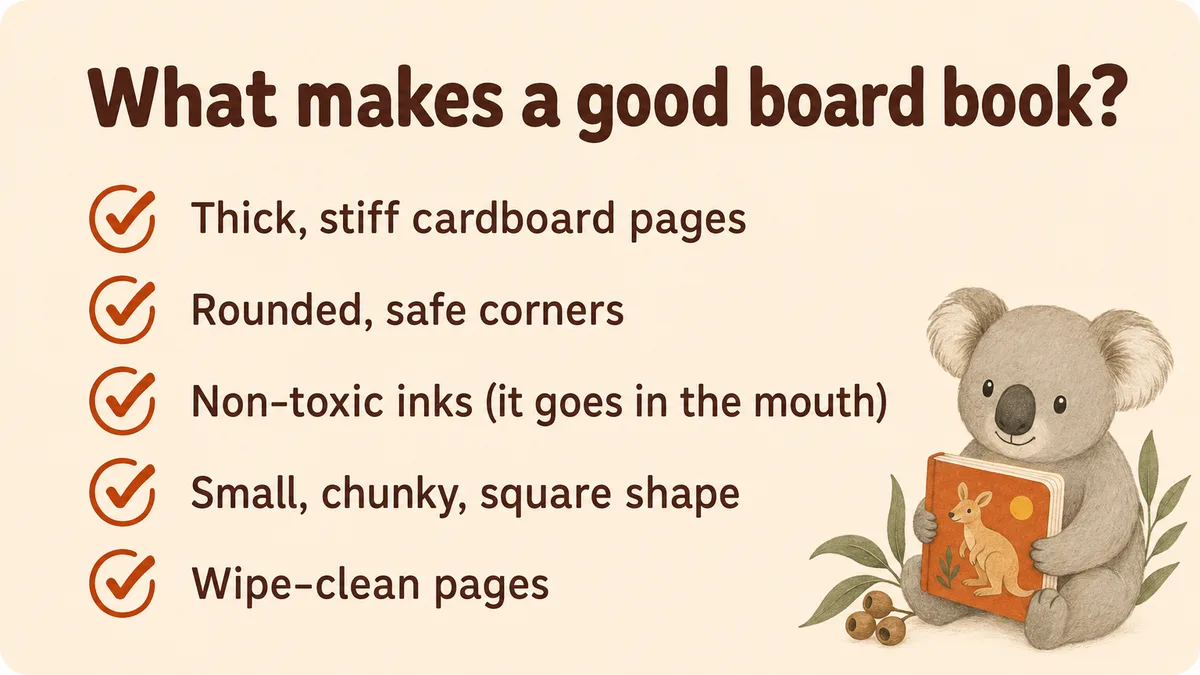 Durability first, story second — the features that matter in a board book.
The types of board books (and which your baby needs first)
Not all board books do the same job. There are roughly four kinds, and a baby moves through them in order as they grow.
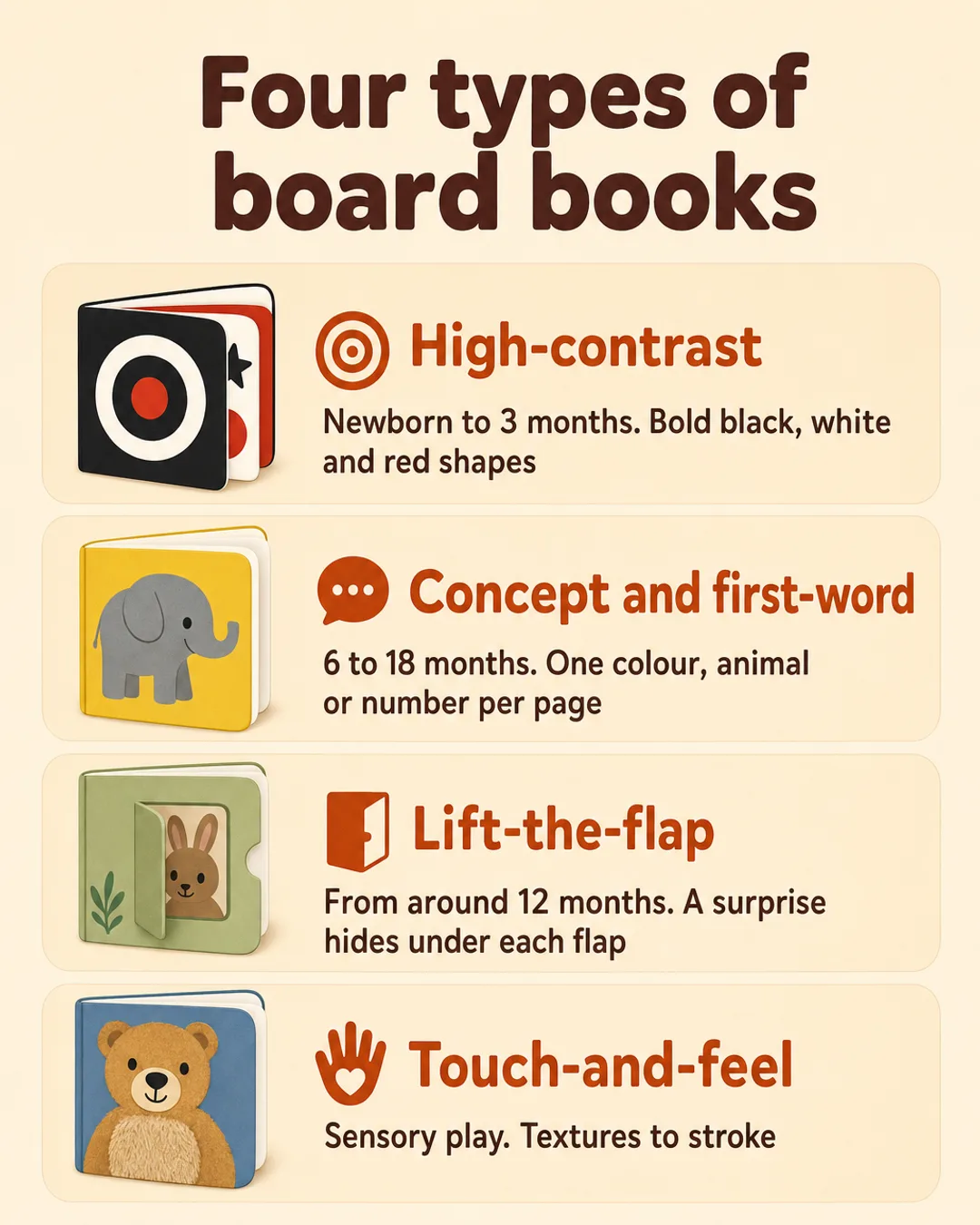 Babies move through these four types in order, roughly newborn to age two.
High-contrast books come first. Newborn eyesight is blurry and drawn to strong edges, so these use bold black, white, and red shapes. Useful for the first few months, then quickly outgrown.
Concept and first-word books are the workhorses. One clear thing per page: a colour, an animal, a number. These suit roughly six to eighteen months, when a baby wants to point and name everything in sight. Grug Colours and Grug Animals are exactly this: one bold image per spread, nothing cluttered.
Lift-the-flap books arrive once a baby has the hand control to lift a flap without destroying it, usually around one. The surprise underneath is the whole appeal.
Touch-and-feel books add textures to stroke. Good for sensory play, though they wear out faster than plain board.
For a full breakdown of which book suits which month, see our guide to Australian children’s books for babies and toddlers. This page is about the format itself rather than the age-by-age picks.
The best Australian board books
A short, opinionated list beats a 57-item grid. These are the Australian board books actually worth owning.
Where Is the Green Sheep?
Mem Fox and Judy Horacek’s Where Is the Green Sheep? won the CBCA Book of the Year for Early Childhood in 2005 and has sold over a million copies. The rhythm makes it read aloud beautifully, and the running joke pays off by the time your child is one. If you buy one Australian board book, buy this.
The Grug board books
There are five classic Grug board books: Grug, Grug Colours, Grug Animals, Grug ABC, and Grug 123. Ted Prior created Grug in 1979, and the board editions put a familiar, high-contrast character (round, striped, no clutter) into a format small hands can manage. The original Grug is a simple story; the other four are concept books for naming colours, animals, letters, and numbers.
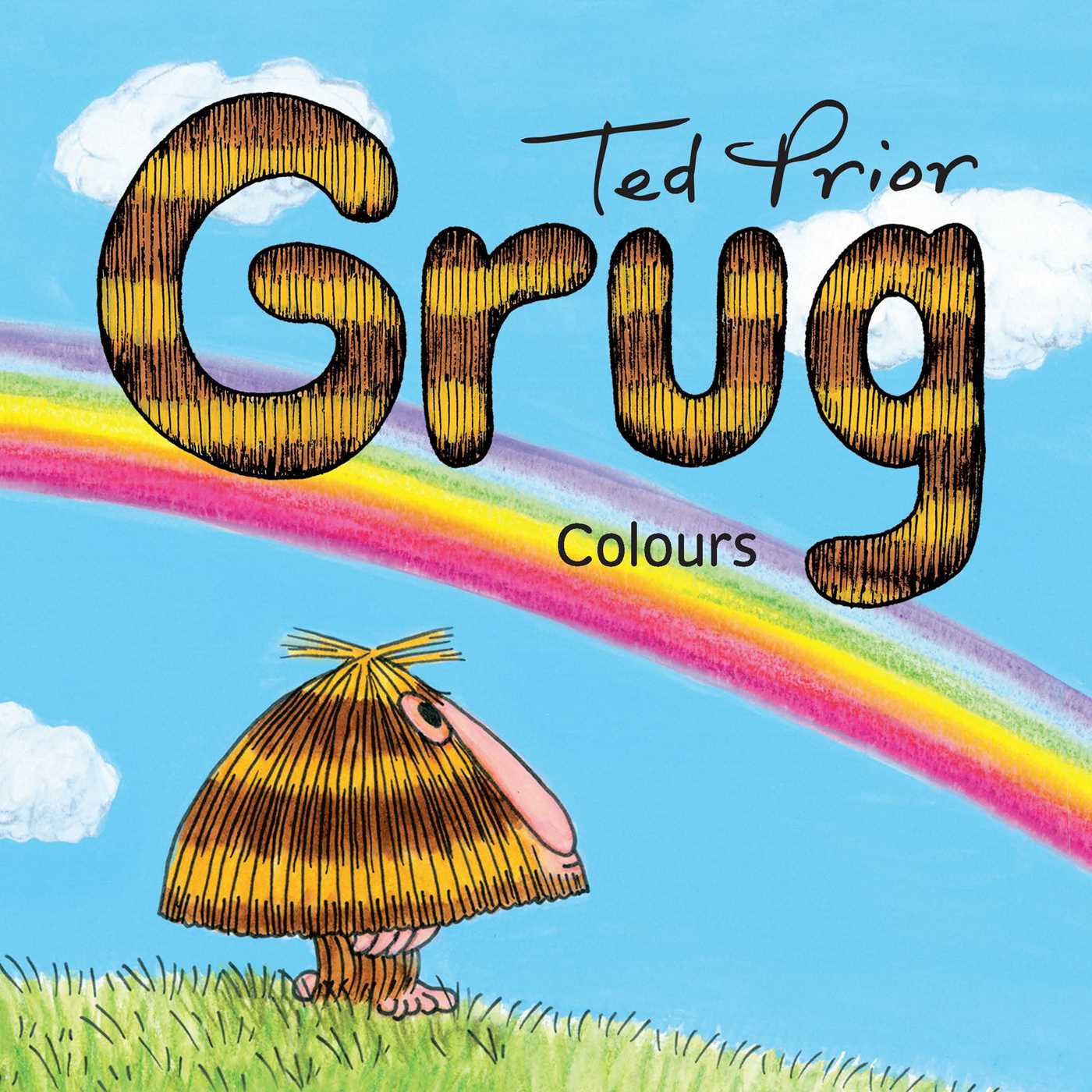 Grug Colours: one bold image per spread — a concept board book for naming.
Native-animal board books
Australia has a deep bench here. Renée Treml’s work and various Australian-animal board books introduce babies to wombats, kangaroos, platypuses, and cockatoos, local wildlife instead of the imported farm animals most baby books default to. Worth seeking out so your child’s first animals are the ones they’ll actually see.
Indigenous-art board books
A growing category, and a good one. Australian Animals in the Indigenous Discovery range pairs first-word labels with artwork by Aboriginal artist Leanne Mulgo Watson. These do double duty: early vocabulary plus a child’s first exposure to Aboriginal art.
Australian board book box sets (the best gifts)
For a baby shower or first birthday, a box set beats a single book. It feels like a proper gift, and a slipcase keeps the set together instead of scattered under the couch.
The Grug My First Library set is built for this: all five classic Grug board books in one large-format, shrinkwrapped slipcase, made as a toddler gift. Renée Treml’s My First Little Library of Australian Animals (Penguin) does the same with native wildlife: several small board books in a slipcase sized for little hands.
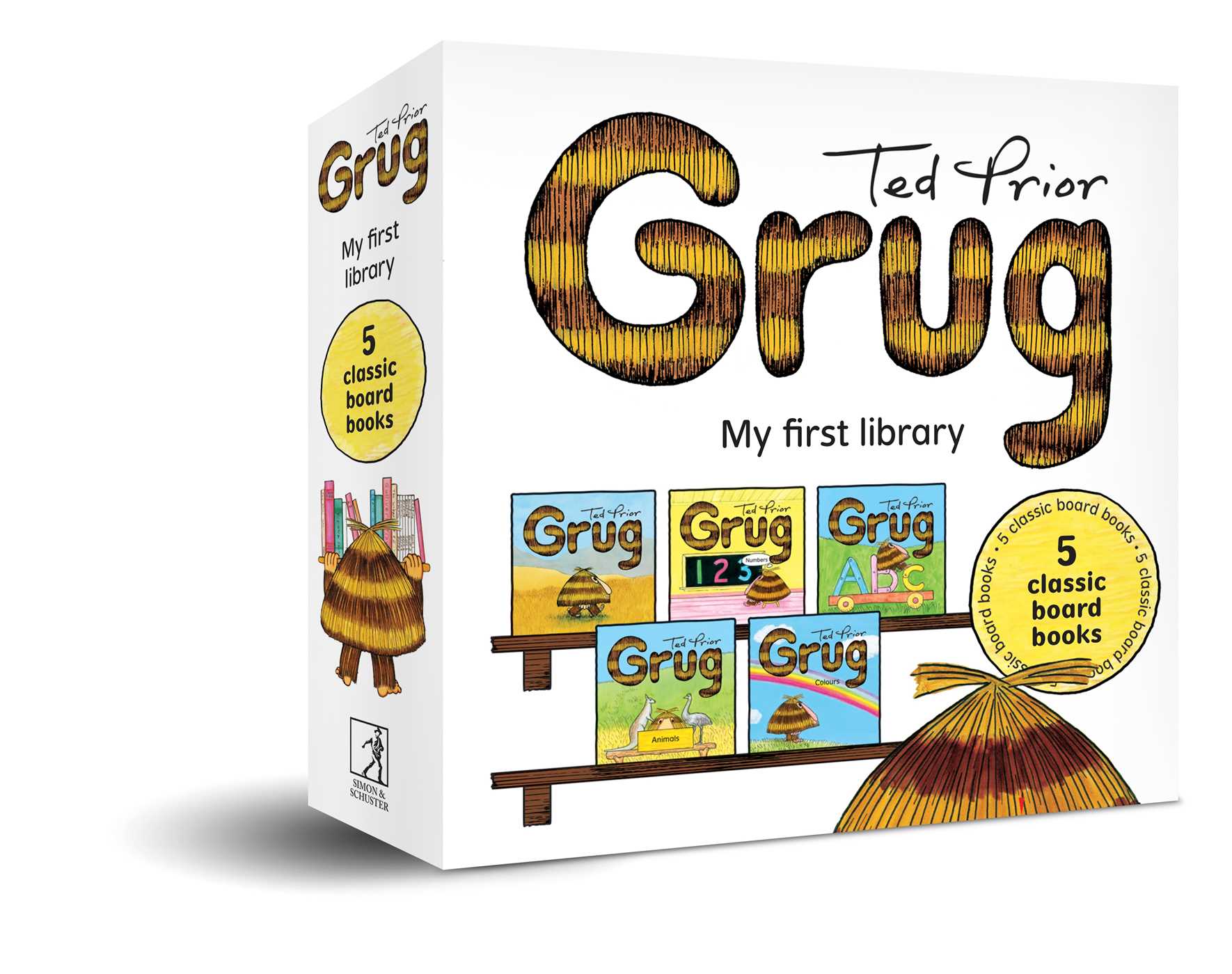 Grug My First Library: all five board books in one slipcase, made as a gift.
How many board books does a baby need?
Fewer than you think. A baby doesn’t read widely. They read the same book forty times and want it again. A small shelf of six to ten board books, rotated occasionally, beats a giant pile your child ignores.
So don’t try to buy the whole category. Get two or three strong ones, see which becomes the book, and build slowly from there. The chewed, dented favourite is worth more than ten pristine ones still in the wrapper.
Frequently asked questions
What age are board books for?
Birth to around three. Board books are made for the stage when a baby explores with hands and mouth before eyes, so the thick pages and rounded corners survive grabbing, throwing, and chewing. Most children move to paper picture books around two to three.
Why are board books good for babies?
They’re durable enough to take the punishment a baby dishes out, safe to chew thanks to thick board and non-toxic inks, and sized for small hands to hold and turn. A paper book tears in seconds; a board book lasts through the whole baby stage and often a sibling after that.
When do toddlers move on from board books?
Usually between two and three, once they can turn paper pages without tearing them and sit through a longer story. There’s no rush. Plenty of toddlers keep a few favourite board books well past three, especially for the car and the pram.
Are board books or picture books better for a baby?
For a baby under two, board books: they survive being chewed and dropped, which paper picture books don’t. Picture books have richer artwork and longer stories, so they come into their own once your child is a careful-enough toddler.
How many board books does a baby need?
A small rotating collection of six to ten is plenty. Babies prefer deep repetition over variety, so a few well-loved books beat a large library they barely touch.
A board book’s job is to be grabbed, gummed, dropped, and read again. The good ones take it and keep going. If you’re starting a baby’s first shelf, the Grug board books are built for exactly that: small, sturdy, and made to survive the first two years.