Australian Children’s Books for Babies and Toddlers: A First-Bookshelf Guide
The first book a baby owns rarely survives in good condition. The corners get chewed. A page gets torn. It gets read so many times that you can recite it with your eyes shut while half-asleep at 2am. That’s not damage. That’s a book doing its job.
Choosing Australian children’s books for babies is less about finding the “best” book and more about matching the book to the stage your child is actually at. A newborn needs something completely different from an eighteen-month-old. So this guide sorts the Australian children’s books for babies and toddlers worth owning by age — newborn, the middle months, and toddler — plus which format suits when, and which ones make good gifts. This is a Grug fan site, so the bias is declared up front, but everything here earns its spot on the shelf.
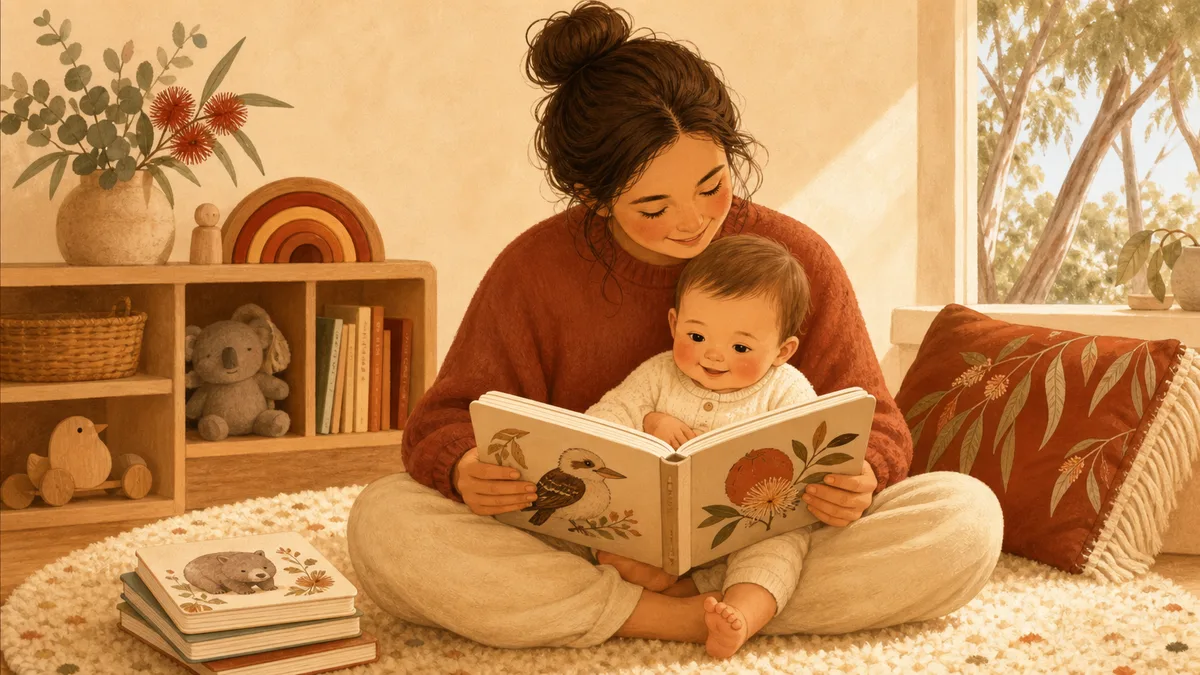 A first bookshelf starts with a few sturdy board books made for small hands.
Why read to a baby who can’t understand the words?
Because they’re not listening for meaning. They’re listening for you. A baby being read to hears rhythm, tone, and the same voice they already trust, and that’s where early language starts, long before a single word lands. Australian speech pathologists put reading from birth near the top of every early-literacy list for exactly this reason.
You don’t need to finish the book. You don’t need to do voices (though it helps). A newborn will happily “read” the same two pages forty times. Repetition is the feature, not a problem to solve.
Board books vs picture books: which does your baby need?
A board book is printed on thick cardboard with rounded corners, built to be grabbed, dropped, and chewed, which is exactly what a baby will do to it. A picture book has paper pages and richer illustration, but it tears easily, so it suits toddlers with a bit more control. Start with board books, move to picture books around two.
That’s the whole rule, really. Under one, almost everything should be a board book, because a baby explores a book with their mouth and hands before their eyes. The paper-page classics can wait on a high shelf until your child stops trying to eat them. For more on the format itself, see our guide to Australian children’s board books.
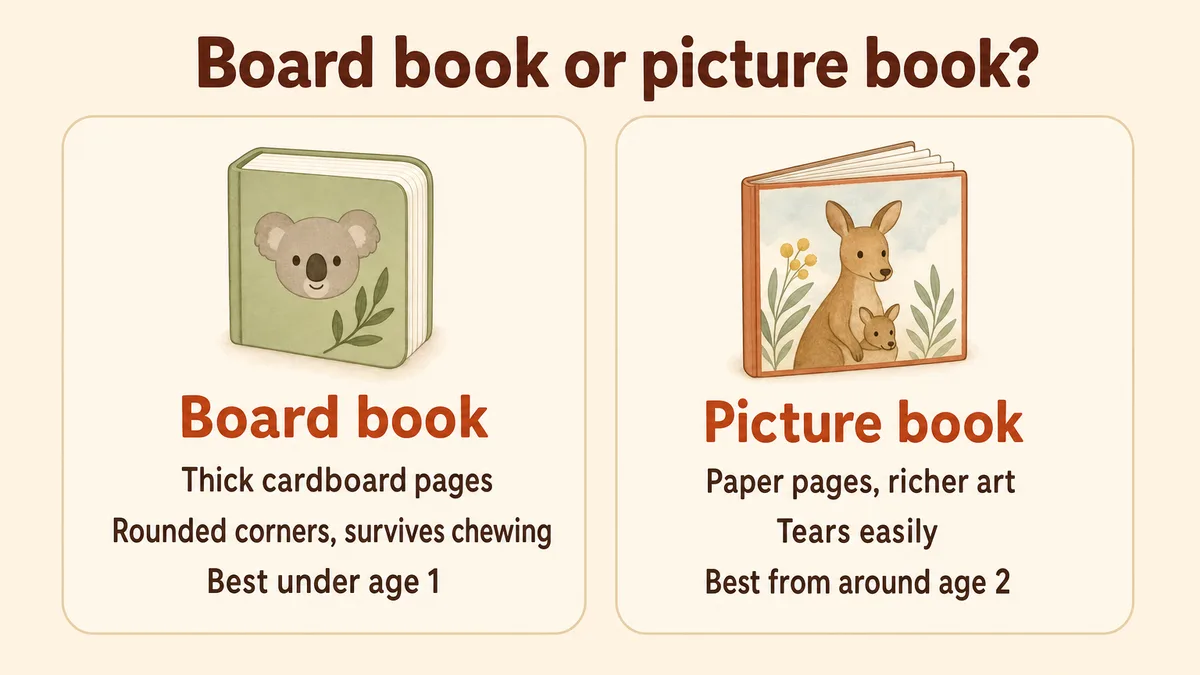 The rule of thumb: board books under one, picture books from around two.
The best Australian books for newborns (0–6 months)
Newborn vision is blurry and drawn to strong contrast. A baby this age can’t track a busy watercolour scene, but they’ll lock onto bold shapes, simple faces, and pages with a clear edge between light and dark. Keep it simple and rhythmic.
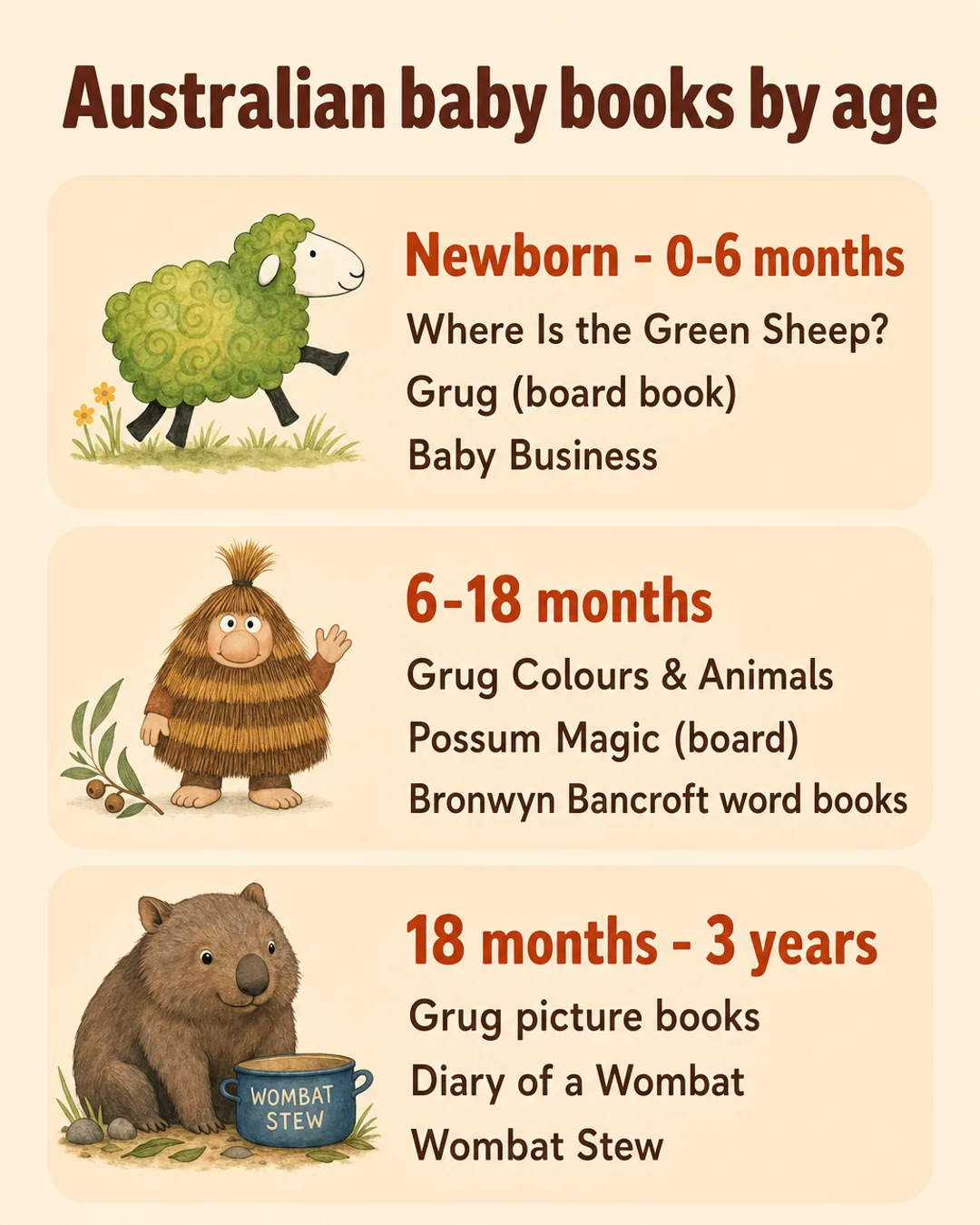 Match the book to the stage: high-contrast board books first, stories later.
Where Is the Green Sheep?
Mem Fox and Judy Horacek’s Where Is the Green Sheep? (2004) has quietly become one of the most reliable first books in the country. Short, rhythmic, with a gentle running joke a baby can’t follow yet but will love by the time they’re one. The board book edition is the one you want.
Grug
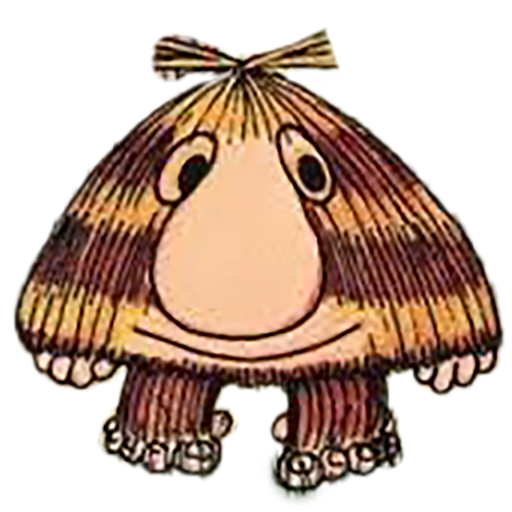
The original Grug board book is about as simple as a story gets: a small bush creature, a clear shape, one idea per spread. Grug himself is round, striped, and high-contrast, which is part of why he works for very young eyes. Ted Prior created him in 1979, and the board editions are made for exactly this age.
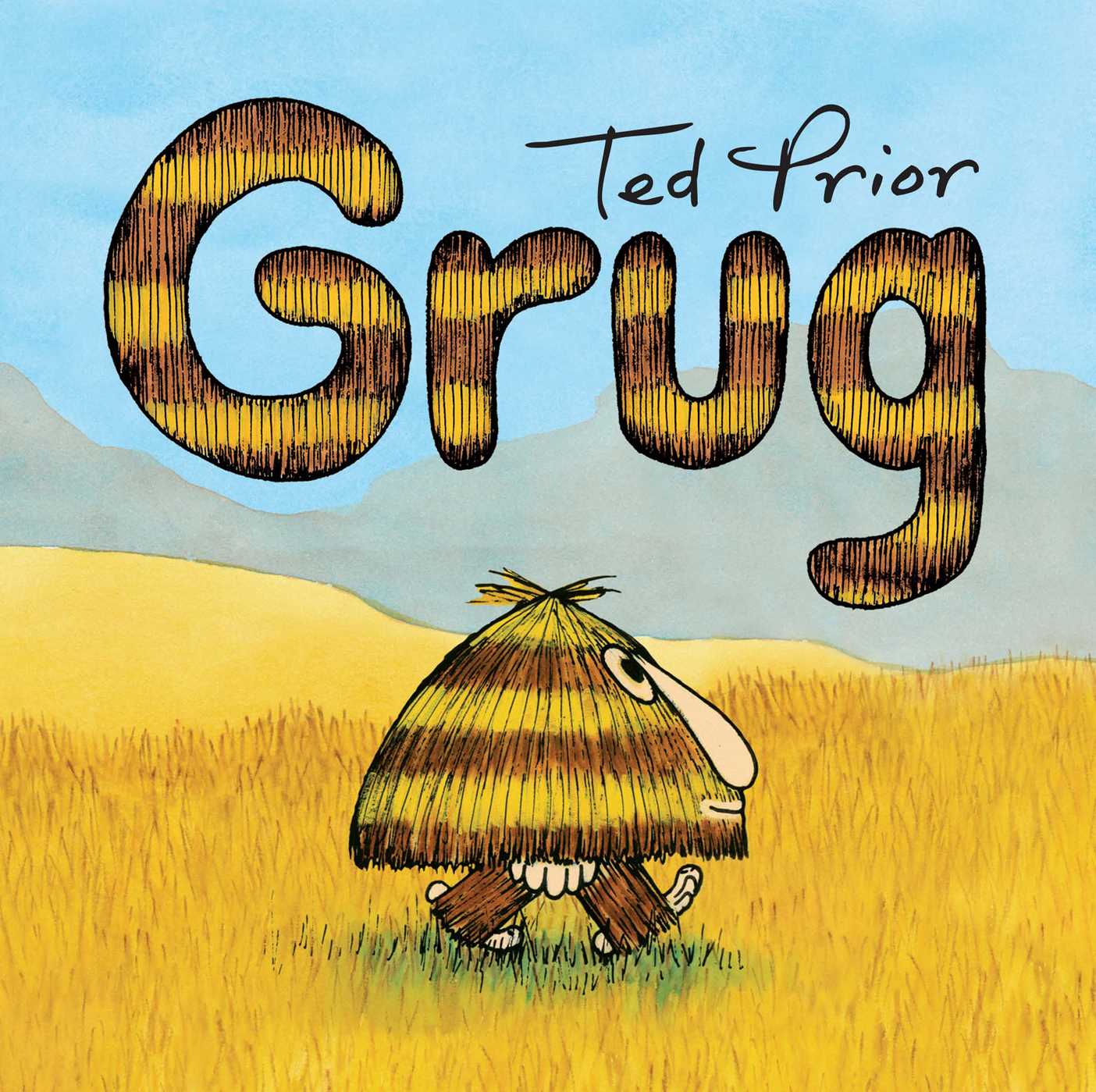 The original Grug board book: one simple idea per spread, built for the youngest eyes.
Baby Business
Jasmine Seymour’s Baby Business welcomes a newborn to Country through a smoking ceremony, told in soft, poetic language. It’s a calm, beautiful book to read to the youngest babies, and one of a growing number of Aboriginal-authored books written specifically for the cradle.
The middle months (6–18 months)
Something changes around six months. Your baby starts pointing, grabbing, turning pages (badly), and wanting to name things. This is naming-book season: colours, animals, first words. The story barely matters; the back-and-forth of “what’s that?” is the point.
Grug Colours, Grug Animals, Grug ABC and Grug 123
This is where the Grug concept board books earn their keep. Grug Colours and Grug Animals are pure naming books: one clear thing per page, no clutter. Grug ABC and Grug 123 add letters and numbers for the older end of this band. They’re chunky, they survive being thrown, and the familiar character gives a baby a reason to come back to them.
Possum Magic (board edition)
Mem Fox and Julie Vivas’s Possum Magic (1983) is Australia’s best-selling picture book ever, over 3.5 million copies. The board edition trims it for little hands. The journey around Australia eating local foods gives you plenty to point at and name.
Australian word books
Bundjalung artist Bronwyn Bancroft’s Australian word books pair her bold, colourful artwork with first words and native animals. The strong colour blocks hold a baby’s attention better than softer illustration does at this age.
Toddlers (18 months to 3 years)
Now the story matters. A toddler can sit through a plot, laugh at a joke, and demand the same book every single night for a month. You can move beyond board books here (mostly, though keep a few sturdy ones for the car and the pram).
Grug picture books
The full Grug series runs to 47 books, each one built around a small, concrete problem: learning to swim, making a friend, being scared of the dark. No villains, no drama. Grug works it out, and that’s the book. For a toddler, watching a character their own size calmly solve a small problem is genuinely reassuring. There’s a Grug book for nearly every situation a small child meets.
Diary of a Wombat
Jackie French and Bruce Whatley’s Diary of a Wombat (2002) is a modern classic for good reason. A wombat whose week is sleeping, eating, and training the neighbours to hand over carrots. Toddlers find it hilarious. So do exhausted parents who recognise the negotiating tactics.
Wombat Stew
Marcia Vaughan and Pamela Lofts gave us Wombat Stew (1984), with its chantable “wombat stew, wombat stew” refrain. It’s a preschool staple because toddlers join in, and a book a toddler can shout along to is a book that gets read again.
If you want to go deeper on the characters behind these books, we cover them in our guide to iconic Australian children’s book characters.
Welcoming a new baby to Country
A small but growing category worth knowing about: Aboriginal-authored books written to welcome a newborn. Alongside Baby Business, there’s the board edition of Welcome to Country by Aunty Joy Murphy and Lisa Kennedy, a gentle, age-appropriate introduction to a Welcome to Country for the very young. These make especially thoughtful new-baby gifts.
Australian baby books that make good gifts
For a baby shower or a first birthday, the trick is durability plus a bit of occasion. A single paperback feels thin as a gift; a box set or a hardback feels like something.
The Grug My First Library box set is built for this: all five classic Grug board books (Grug, Colours, Animals, ABC, 123) in a large-format slipcase, shrinkwrapped, made to be given. Where Is the Green Sheep? and Possum Magic are also safe gift choices because almost every Australian parent already knows and trusts them. When in doubt, a recognisable classic beats a clever unknown.
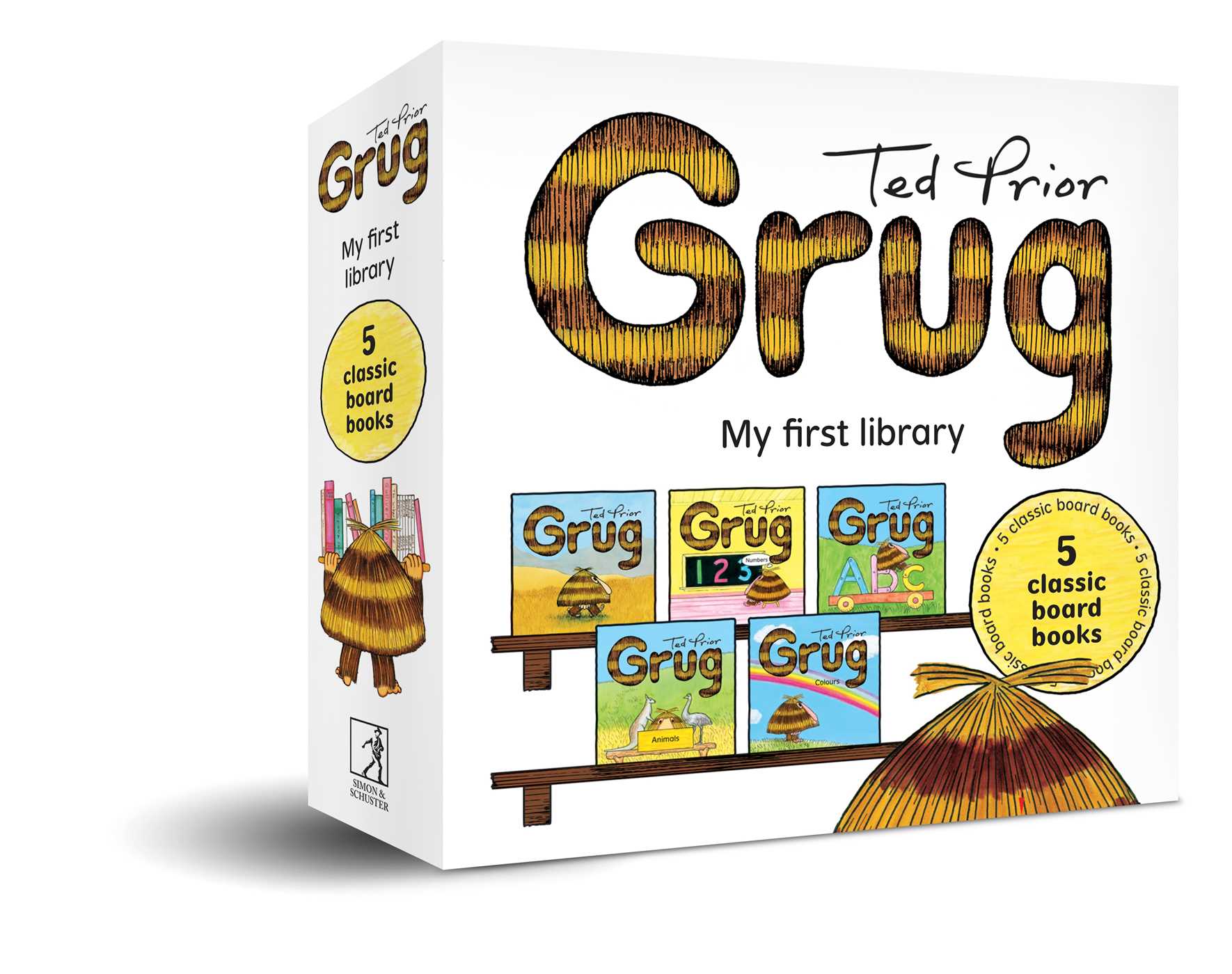 The Grug My First Library slipcase: five board books, made to be given.
Browse the Grug board books and box set →
Frequently asked questions
When should you start reading to a baby?
From birth. A newborn doesn’t understand words, but reading builds language through rhythm, tone, and your voice, and Australian speech pathologists recommend it from day one. A few minutes a day is plenty; consistency matters more than length.
What are the best first books for a newborn?
High-contrast board books with simple shapes and rhythmic text. Where Is the Green Sheep?, the original Grug board book, and Baby Business all suit newborns. Avoid busy, detailed illustration this early. Newborn vision can’t track it yet.
What’s the difference between board books and picture books?
Board books have thick cardboard pages and rounded corners, built to survive grabbing and chewing, which makes them right for babies. Picture books have paper pages and richer artwork but tear easily, so they suit toddlers around two and up.
What Australian book makes a good baby shower gift?
A box set or a recognisable classic. The Grug My First Library slipcase (five board books) is made as a gift, and Possum Magic or Where Is the Green Sheep? are reliable single-book choices nearly every parent already loves.
Are black-and-white books better for newborns?
For the first few weeks, high contrast does hold a newborn’s attention best, because their vision is still developing. But strong, bold colour works almost as well, and you don’t need a dedicated black-and-white book, since a simple, high-contrast board book does the same job.
A first bookshelf doesn’t need to be big. A few board books for now, a couple of classics waiting for later, and one or two that become the book, the one read so often the cover falls off. For a baby or toddler, Grug is a good place to start: board books made for small hands, and 47 stories to grow into.