Australian Children’s Books About Animals and the Bush (2025 Picks)
Australia’s native animals are extraordinary. A mammal that lays eggs. A bird that sounds like it’s laughing at you. A bear-shaped marsupial that sleeps twenty hours a day. No other country on earth gives children’s authors this kind of raw material, and Australian picture book authors have been making the most of it for decades.
These are the Australian children’s books about animals and the bush that are worth reading: classics that have stayed in print for forty years alongside newer titles that deserve a spot on the shelf.
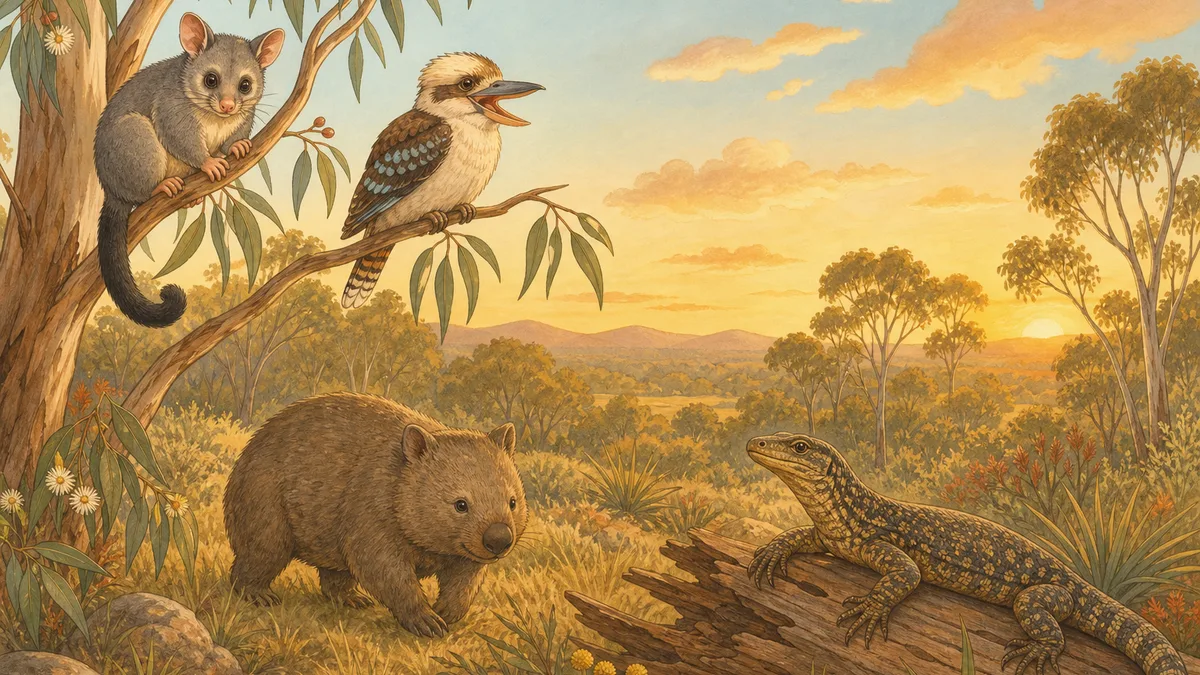
Native animals are the raw material behind Australia’s best-loved picture books.
The classics every Australian child should know
The most-loved Australian children’s books featuring native animals include Possum Magic (Mem Fox), Diary of a Wombat (Jackie French), Koala Lou (Mem Fox), and the Grug series (Ted Prior). Each has stayed continuously in print for decades because the animals feel real, the stories earn their ending, and Australian kids see something of their own world in them.
Possum Magic by Mem Fox (ages 3–6) is probably the most-read Australian picture book ever printed. Grandma Poss makes young Hush invisible to keep her safe, then has to travel the whole country — lamingtons in Adelaide, mornay in Melbourne, pavlova in Perth — to find the magic to reverse it. The possum hook is perfect: possums are everywhere, most Australian families have had one on the back fence, and the gentle mystery of an invisible animal fits a picture book beautifully.
Diary of a Wombat by Jackie French (ages 4–7) is told entirely from the wombat’s perspective. New humans have moved in next door. The wombat is deeply irritated by the quality of the food on offer and has taken to sleeping under their veranda. Completely deadpan. Kids find it hilarious, and the wombat’s stubborn indifference to human inconvenience holds up across dozens of re-reads.
Koala Lou by Mem Fox (ages 3–6) gets underestimated because the word “koala” sounds safe and obvious. But the story — a koala determined to win the Bush Olympics to make her mother proud — earns a proper emotional ending. It’s one of the few picture books that makes adults tear up as reliably as it delights kids.
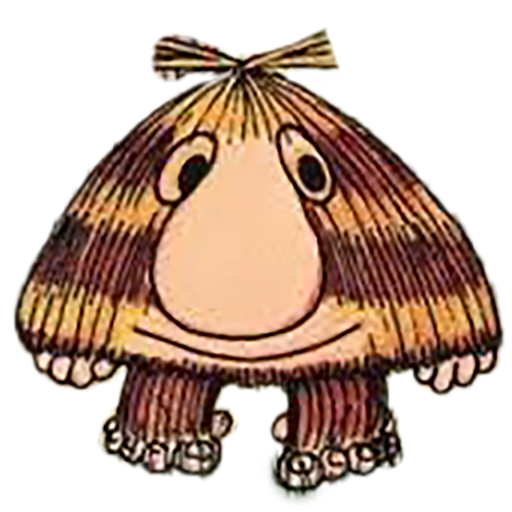
The Grug series by Ted Prior (ages 2–7) is a little different. Grug isn’t an animal. He’s a small round character who hatched from a burrawang nut and lives in the Australian bush. But native animals are woven through the stories. Grug Meets a Dinosaur stars a goanna — which is, if you think about it, genuinely dinosaur-adjacent — and Grug and the Bushfire introduces Cara the carpet snake as a character. Not a prop. A friend.
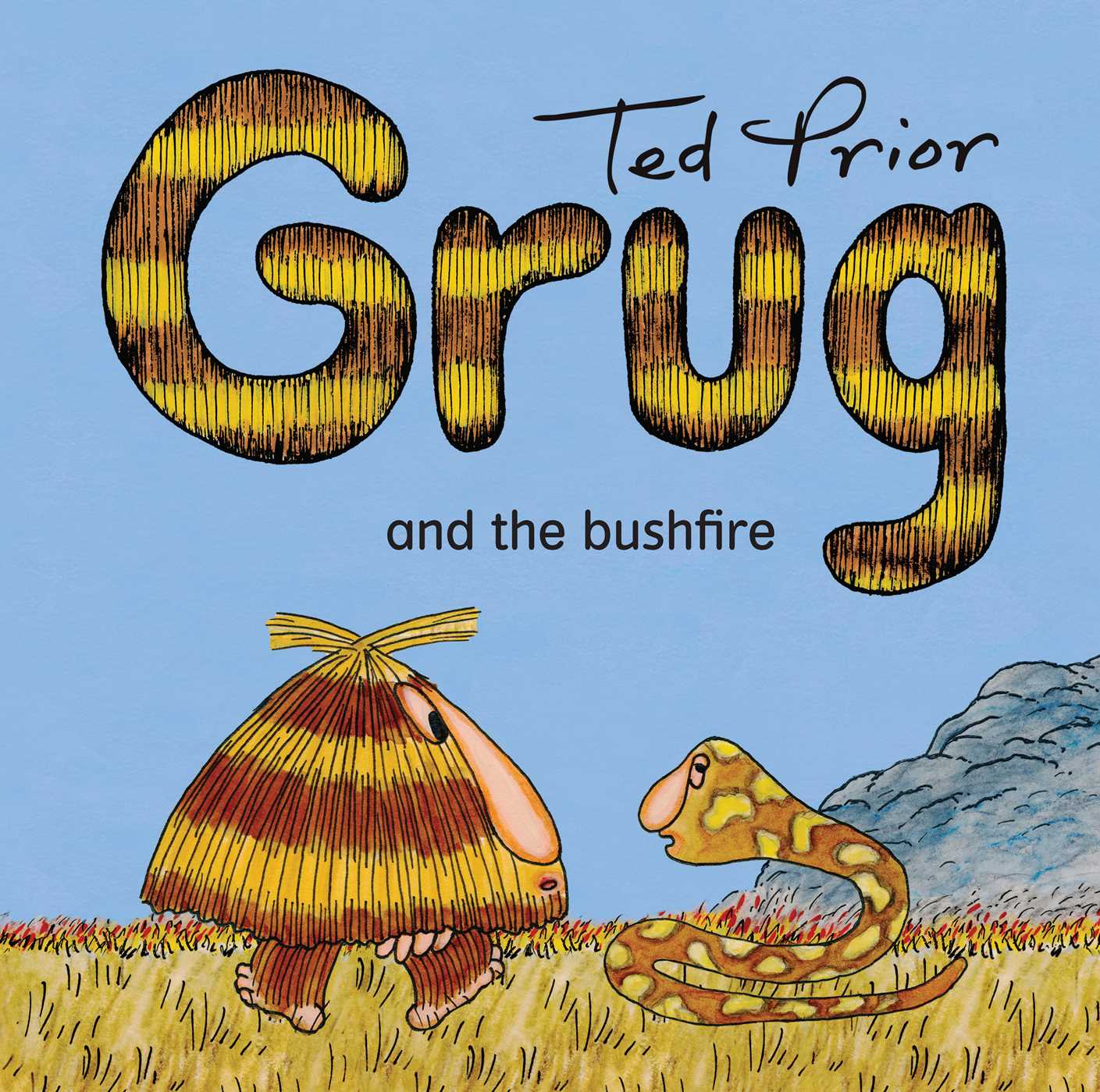
In Grug and the Bushfire*, Cara the carpet snake is a character, not a prop.*
For more on these characters and why they’ve lasted, see our guide to iconic Australian children’s book characters.
Animal books for babies and toddlers (ages 0–3)
Honestly, this is where the Australian market is thin. Walk into any bookshop and there are forty board books about bears and bunnies for every one about a quoll or a bandicoot.
The Grug board books are the most obvious place to start for this age group. Simple, sturdy, with the kind of bold illustration that works for little hands and two-minute attention spans. Ted Prior has been drawing Grug and his bush surroundings since 1979. The visual shorthand is exactly right for the 0–3 age.
Dropbear by Philip Bunting (ages 2–5) plays on the Australian tradition of telling tourists that dropbears are real. Which means it also works for Australian kids who already know the joke and love being in on it. The illustrations are bold enough for very young children, and the conceit is funny at any age.
Hello Cocky by Hilary Bell is worth tracking down for toddlers who’ve been shrieked at by a sulphur-crested cockatoo. In Australia, that’s most of them.
At this age: look for one animal per spread, a name that’s easy to say, and illustrations bold enough to read from across the room. Kookaburra, wombat, echidna — good. “Australian wildlife” as a vague category — not.
For a full list, see our Australian children’s board books guide.
Picture books about bush animals (ages 3–6)
This is the richest category, and where it pays to go beyond Possum Magic.
Grug Meets a Dinosaur by Ted Prior works for exactly the reason that makes a great Australian animal book: the goanna is iconic, has a short punchy name, and carries genuine prehistoric menace without being frightening. Kids immediately understand why a small round creature might find one alarming. The story doesn’t use the animal as decoration. The goanna is the whole point.
Ninja Bandicoots and Turbo-Charged Wombats by Hazel Flynn (ages 4–8) leads with humour and earns its wildlife facts. Bandicoots and wombats are exactly the right animals for this: real, Australian, recognisable silhouette, names that sound funny out loud. The book doesn’t pretend to be a nature documentary and is better for it.
A Hollow Is a Home by Abbie Mitchell and Astred Hicks (ages 5–8) focuses on tree hollows, specifically the 340-plus species that depend on them for shelter. Sounds dry on paper. It isn’t. The specificity of the habitat angle (not “the bush” in general but this hollow, these animals, this tree) gives it the kind of detail that sticks.
Tiddalick: The Frog Who Caused a Flood by Robert Roennfeldt (ages 4–7) is the most accessible starting point for Indigenous stories about Australian animals. A greedy frog drinks all the water in the land, and the other animals have to make him laugh to get it back. An old story told with restraint. The illustrations do most of the work.
Aussie Easter Hat Parade by Colin Buchanan (ages 2–5) is a seasonal pick rather than a year-round staple — Australian animals making Easter hats is exactly as delightful as it sounds — but worth knowing about for March and April. Colin Buchanan knows how to write for this age, and Simon Williams’ illustrations are lively enough to hold a room.
For older kids: wildlife with more depth (ages 6–12)
Black Cockatoo by Carl Merrison and Hakea Hustler (ages 10–14) is the strongest recent Australian wildlife book for this age group. Thirteen-year-old Mia, a Jaru girl, cares for an injured black cockatoo her community calls dirrarn. As the bird recovers, so does Mia’s confidence. The conservation angle isn’t bolted on. It comes from character, not from a message.
Sensational Australian Animals by Stephanie Owen Reeder and Cher Hart (ages 8–12) covers 145 native animals organised by sense: what they see, hear, smell, taste, and feel. Winner of the 2024 Whitley Award. 2025 CBCA Notable Book. This is for kids who’ve moved past “here is a koala” and are ready to learn that some turtles breathe through their tails. (They do.)
Our Birds: Nilimurrungu Wayin Malanynha by Siena Stubbs (ages 6–9) teaches Yolŋu names for Australian birds alongside the English ones, and explains how birds connect to moiety, the kinship system that structures Yolŋu society. The most genuinely educational book on this list, and the one most likely to change how a child thinks about the country they live in.
For more across all age groups, see our guide to classic Australian children’s books.
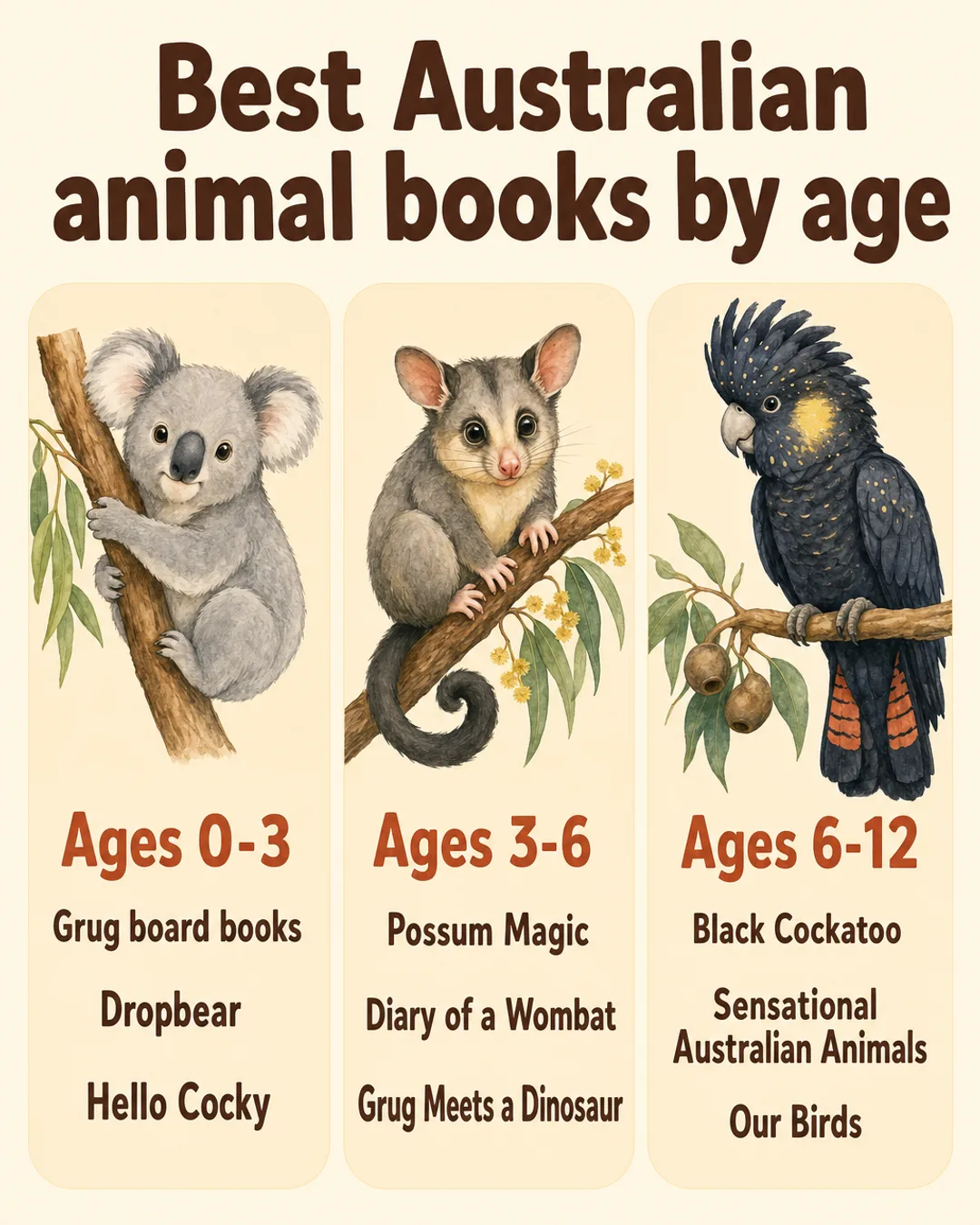
At a glance: where to start by age.
What makes a great Australian animal book?
The ones that last tend to follow a pattern.
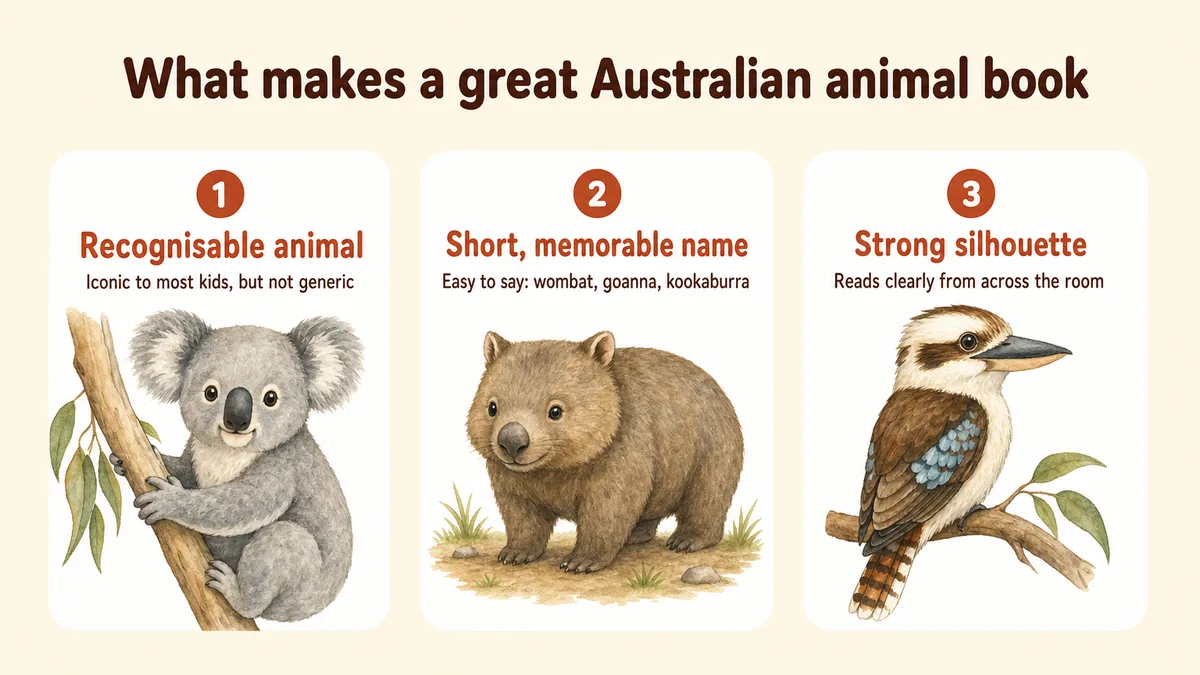
The pattern behind the books that get read twice.
The animal is recognisable — iconic to most Australian kids — but not so obvious it feels generic. There’s a reason so many great Australian picture books feature possums, wombats, kookaburras, and goannas rather than, say, a common skink. The animal needs a short, memorable name and a silhouette that works in an illustration.
Too obscure and the child has no anchor. Too simple — “a frog” rather than a “green tree frog” or a “Tiddalick” — and you lose the specificity that makes Australian wildlife worth reading about in the first place. The sweet spot is an animal most children have heard of, with a story that shows them something they didn’t know.
The bush setting helps more than it might seem. Australian animals don’t exist in abstraction: they live in particular places, doing particular things, in particular seasons. Books that show that, rather than just listing animals, are the ones that get read twice.
Frequently asked questions
What is the most popular Australian children’s book about animals?
Possum Magic by Mem Fox is the highest-selling Australian picture book ever published and the most widely recognised. Diary of a Wombat by Jackie French is a close second for the 4–7 age group.
What age is Possum Magic suitable for?
Ages 3 to 6 for reading aloud. Confident readers from age 5 can tackle it independently.
Are there Australian animal books for babies?
The board book market for Australian native animals is thinner than it should be. The Grug board books by Ted Prior are the most established Australian-made option for babies and very young toddlers, followed by Philip Bunting’s Dropbear for slightly older children.
What Australian children’s books include Indigenous stories about animals?
Tiddalick: The Frog Who Caused a Flood (Robert Roennfeldt) and Our Birds: Nilimurrungu Wayin Malanynha (Siena Stubbs) are the strongest starting points. The Rainbow Serpent by Dick Roughsey is the classic for ages 6 and up.