The Best Australian Picture Books: A Fan’s Shortlist
Most “best picture books” lists are really lists of what sold last Christmas, padded out to fifty so the page ranks. We’ve spent years reading Australian picture books aloud to our own kids, and the question we keep coming back to is shorter than that: “We’ve got one slot in the bedtime rotation. What goes in it?”
So this is a shortlist, not a phone book. The best Australian children’s books in the picture-book format, chosen for one thing above all: whether they survive being read four hundred times. Because that’s the real test. A book a child asks for once is a nice afternoon. A book they demand nightly for a month, until you can recite it with your eyes shut, has earned its slot. This is a Grug fan site, so that bias is on the table from the first line. Every other title here got in on its own merits.
 The shortlist test is repeat reading, not last Christmas’s sales.
The shortlist at a glance
If you want the answer and not the reasoning, here it is. Then the why, book by book, below.
| Book | Author / illustrator | Year | Best for |
|---|---|---|---|
| Where Is the Green Sheep? | Mem Fox & Judy Horacek | 2004 | First book, 0–3 |
| Grug | Ted Prior | 1979 | First stories, 0–4 |
| Who Sank the Boat? | Pamela Allen | 1982 | Read-aloud, 2–5 |
| Possum Magic | Mem Fox & Julie Vivas | 1983 | The Australian one, 2–6 |
| Wombat Stew | Marcia Vaughan & Pamela Lofts | 1984 | Join-in chanting, 3–6 |
| Magic Beach | Alison Lester | 1990 | Imagination, 3–7 |
| Diary of a Wombat | Jackie French & Bruce Whatley | 2002 | Laughs, 3–7 |
| Animalia | Graeme Base | 1986 | Poring over, 4+ |
| My Place | Nadia Wheatley & Donna Rawlins | 1987 | Older readers, 6+ |
| Pig the Pug | Aaron Blabey | 2014 | Funny rhyme, 3–7 |
What makes a great Australian picture book?
A great picture book holds up to being read again and again, uses few words but the right ones, has pictures that carry as much story as the text, and lands somewhere true for a child. The best Australian ones add a fifth thing: they sound and look like here, not a borrowed English village. That’s the whole bar. Not awards, not sales.
Award stickers help a book get noticed, but they don’t predict the rotation. We’ve seen prize-winners that parents found a chore by the third night, and quiet little books with no medal at all that a family wore out and bought again. The thing you’re really testing for is rhythm. Read the first page aloud in the shop. If your own voice wants to keep going, that’s the book.
The best first picture books (0–4)
Babies and toddlers don’t read pictures the way you do. A busy spread is noise to a one-year-old. What works is rhythm in the ear and something bold and simple for the eye to lock onto. These two are the safest starts in the country.
Where Is the Green Sheep? — Mem Fox & Judy Horacek (2004)
If a new parent asks me for one book and one only, this is it. Page after page of sheep doing things, all building to a gentle little reveal about where the green sheep has got to. Fox’s text is pared right back, Horacek’s line drawings are clean and funny, and the whole thing reads in under two minutes, which matters more than people admit when you’re doing it for the eleventh time. It’s become the most reliable first book in the country for a reason.
Best for: Birth to 3. The board edition survives the chewing years.
Grug — Ted Prior (1979)
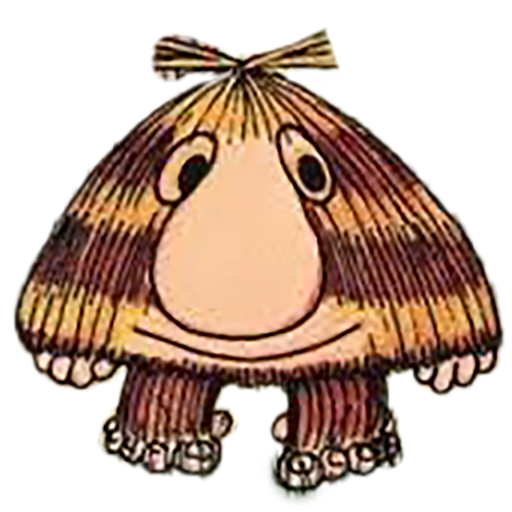
Yes, the one this site’s about. Here’s the case anyway. Ted Prior made Grug from the fallen top of a Burrawang palm: a round, striped little bush creature who works through exactly one small problem per book and then sorts it out. No villain. No fuss. For a very young child, watching someone roughly their own size calmly handle a problem they recognise — learning to swim, being scared of the dark — is the entire appeal. Grug is also high-contrast and round, which is precisely what a baby’s still-blurry vision finds easiest to hold.
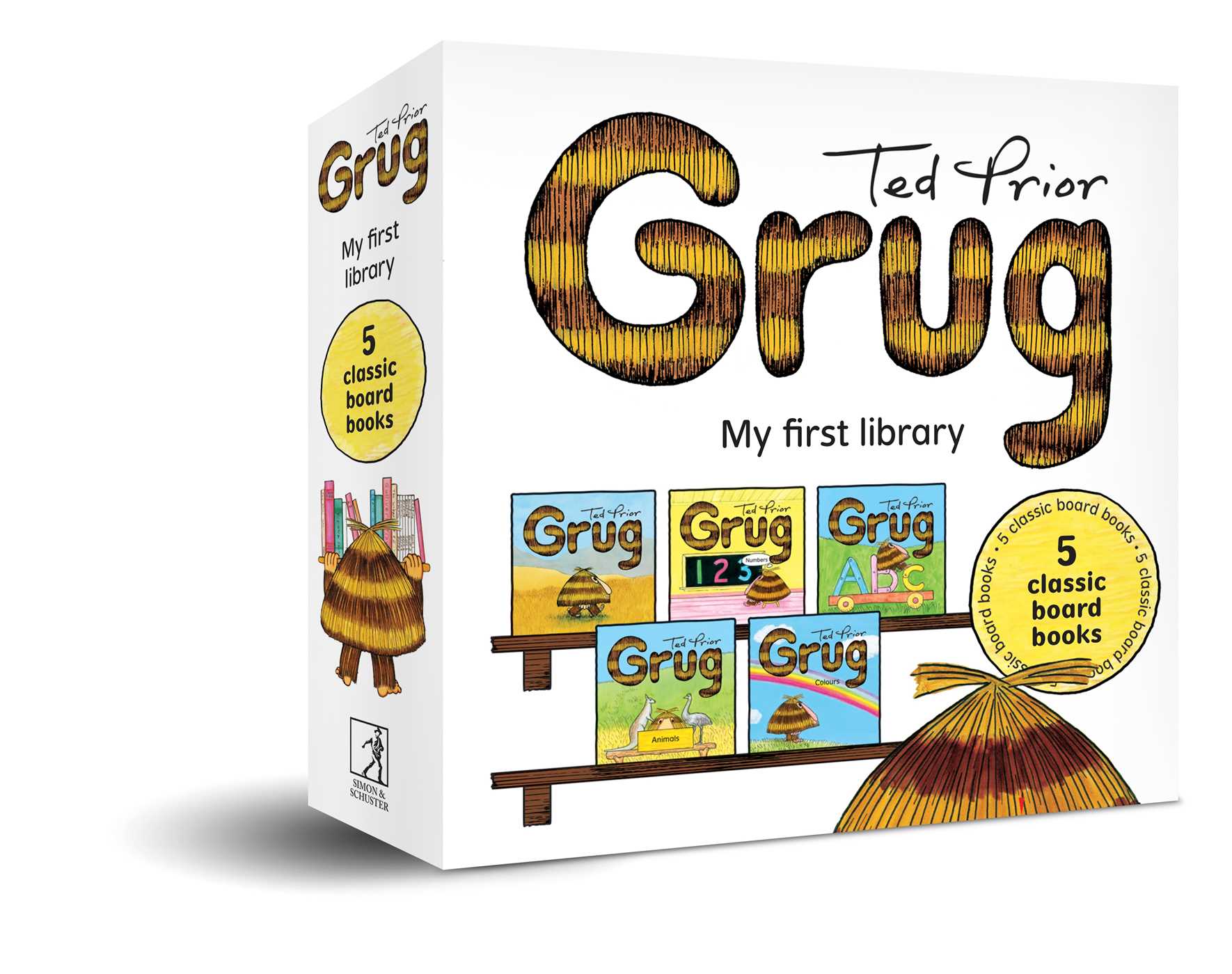 Grug My First Library: five board books, built for the chewing years.
Best for: 0–4. Board books from birth, the picture books from around eighteen months.
See the full list of Grug books →
The best read-aloud picture books (2–6)
Now the story starts to matter, and a three-year-old will want the same one every single night for a month. So the book has to reward you, the reader, too. These are the ones with rhythm, repetition, and a refrain a child can join in on, which is what keeps a tired adult going.
 Read the first page aloud in the shop. If your voice wants to keep going, that’s the book.
Who Sank the Boat? — Pamela Allen (1982)
A cow, a donkey, a sheep, a pig and a tiny mouse climb one by one into a little boat. You can feel the ending coming, and so can a four-year-old, which is the genius of it. Allen teaches balance, cause and effect, and comic timing without a single lesson in sight. It won the CBCA Picture Book of the Year in 1983 and has stayed in print for over forty years. Read it slowly. The pause before the last animal is the whole gag.
Best for: 2–5.
Possum Magic — Mem Fox & Julie Vivas (1983)
The big one. Over 3.5 million copies sold, the best-selling Australian children’s picture book ever printed. Grandma Poss makes her granddaughter Hush invisible with bush magic, then can’t undo it, so the two travel the country eating Australian foods — Vegemite, a lamington, a pavlova — until the right one brings Hush back. Fox’s text has a rhythm you fall into; Vivas’s loose watercolours feel hand-made. If you buy one book to feel unmistakably Australian on the shelf, it’s this.
Best for: 2–6.
Wombat Stew — Marcia Vaughan & Pamela Lofts (1984)
A dingo catches a wombat and sets about cooking it, only for the other bush animals to sabotage the recipe with mud, flies and feathers. The “wombat stew, wombat stew, gooey, brewy, yummy, chewy” chant is the kind of thing children carry round the house for days. It’s been a staple of Australian preschools for forty years because kids don’t just listen to it, they perform it.
Best for: 3–6.
For more on what suits this exact age, we have a separate guide to Australian children’s books for 3-5 year olds.
The best picture books for the Australian world
Some books do a particular job: they show a child the place they actually live. The light, the animals, the beach in summer, the way a backyard changes over a century. For a kid growing up here, that recognition lands differently to any imported story.
Magic Beach — Alison Lester (1990)
A family at an ordinary Australian beach, and the way a child’s imagination turns rock pools into pirate coves and sandcastles into fortresses. Lester wrote it remembering her own childhood on the Victorian coast and then watching her three children do the same. The pictures are busy in the good way — a child can sit and find new things in them — and the text has a roll to it that reads beautifully aloud.
Best for: 3–7.
My Place — Nadia Wheatley & Donna Rawlins (1987)
A clever, quietly ambitious book. It tells the story of one patch of Sydney ground backwards through time, decade by decade, from 1988 all the way to 1788, a different child living there each spread. It won the CBCA Book of the Year and became a school staple and later a TV series. Older than the picture-book norm in its reach, so it suits a child who’s ready to sit with something layered.
Best for: 6+. A read-aloud earlier, with a grown-up to talk it through.
A lot of the most loved Australian books are bush-and-animal stories, and that’s no accident — the thread runs right through the tradition. We cover the heritage end of it in our guide to classic Australian children’s books.
The best picture books for poring over and laughing
Two last jobs a picture book can do. One is to be a world a child gets lost in for years. The other, just as valuable, is to be flat-out funny.
Animalia — Graeme Base (1986)
Less a story than a place to disappear into. An alphabet book where every letter gets a fantastically dense, detailed spread packed with hidden objects starting with that letter. A four-year-old pores over it; a nine-year-old still finds things they missed; adults get caught out too. Base spent years on the artwork and it shows. This is the book a child keeps coming back to long after the simpler ones are outgrown.
Best for: 4 and up, genuinely no ceiling.
Diary of a Wombat — Jackie French & Bruce Whatley (2002)
A wombat’s week, told as her diary: sleep, eat, scratch, and slowly train the humans next door to deliver carrots and oats on demand. Bone-dry and very funny, with Whatley’s wombat doing half the comedy in the pictures. French based the wombat on Mothball, a real one who lived near her. Toddlers laugh at the chaos; parents laugh at the wombat clearly being the one in charge.
Best for: 3–7.
Pig the Pug — Aaron Blabey (2014)
The newest book on this list and proof the tradition’s still going. Pig is a greedy, selfish pug who won’t share with Trevor the dachshund, right up until his greed catches up with him in a satisfying crash. Blabey writes in bouncy rhyme built to be read at speed and a bit over the top, which is exactly how kids want it. It launched a whole series and sold millions. Pure entertainment, no medicine.
Best for: 3–7.
For more on the characters that anchor these books and why a few of them outlast everything else, see our guide to iconic Australian children’s book characters.
How to pick from this list
If you’re standing in a shop and can’t decide, sort by the child, not the cover.
Buying for a baby or a first birthday? Stay in the first section. Where Is the Green Sheep? or a Grug board book, every time. The artwork in the cleverer books is wasted on eyes that young, and the board format is the only thing that survives a teething toddler.
Buying for a three-to-five-year-old who already has favourites? Go to the read-aloud picks. You want a refrain they can join in on, because at that age the joining-in is half the fun. Wombat Stew and Who Sank the Boat? both deliver it.
Want the most Australian thing on the shelf, the one that says where the child is from? Possum Magic. Nothing else carries the place quite the same way.
And if you just want laughs and a kid who begs for one more? Diary of a Wombat or Pig the Pug. Funny is not the lesser option. A book a child finds genuinely funny is a book they’ll learn to read on, because they want to get back to the joke.
Frequently asked questions
What is the best Australian picture book?
By sales and cultural standing it’s Possum Magic by Mem Fox and Julie Vivas (1983), the best-selling Australian children’s picture book ever with over 3.5 million copies. For a first book for a baby, Where Is the Green Sheep? is the more reliable pick. “Best” depends on the child’s age more than any ranking.
What’s the best Australian picture book for a toddler?
For under-threes, a high-contrast board book with rhythm beats a busy story. Where Is the Green Sheep? and the Grug board books are the safest starts, because they’re bold enough for new vision and short enough to read again and again without losing your mind.
What counts as a picture book?
A picture book tells its story through words and pictures together, where the illustrations carry as much meaning as the text, usually in 32 pages for children roughly 0–8. That’s different from a chapter book, where the words do the work, or a board book, which is a sturdier format of the same idea built for babies.
What’s the best-selling Australian picture book?
Possum Magic by Mem Fox and Julie Vivas, with more than 3.5 million copies sold since 1983. No other Australian children’s picture book has come close.
Which Australian picture books are funniest?
Diary of a Wombat by Jackie French and Bruce Whatley (2002) and Pig the Pug by Aaron Blabey (2014) are the two that reliably get laughs across a wide age range. Both work because the pictures do half the comedy, so even a pre-reader is in on the joke.
A best-of list this short leaves good books off, and that’s the point: a shelf you’ll actually read beats a shelf that looks impressive. If you’re starting one for a child under five, Grug is a fair place to begin — board books for the smallest hands, picture books to grow into, and 47 quiet stories about being small and working something out.